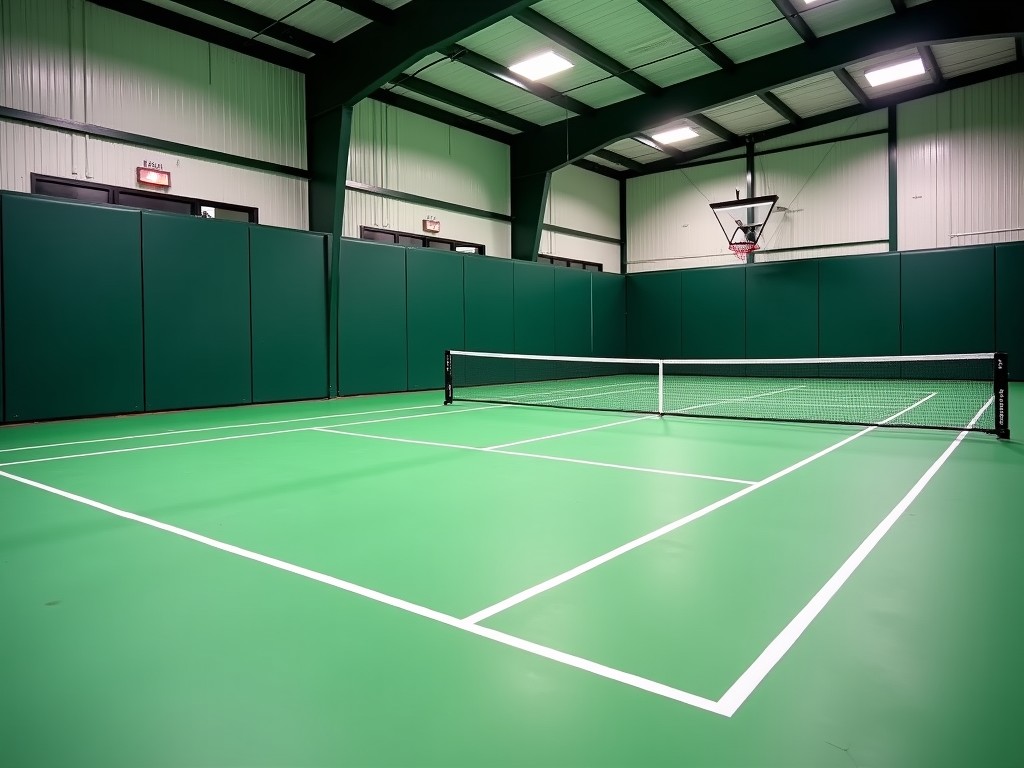
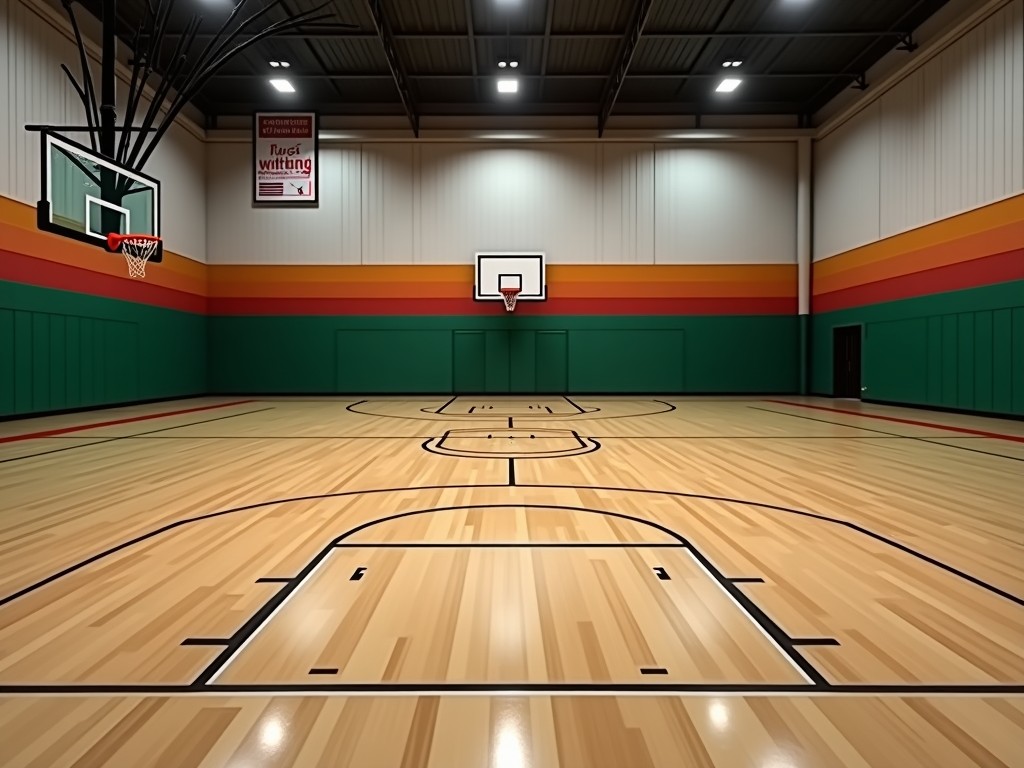
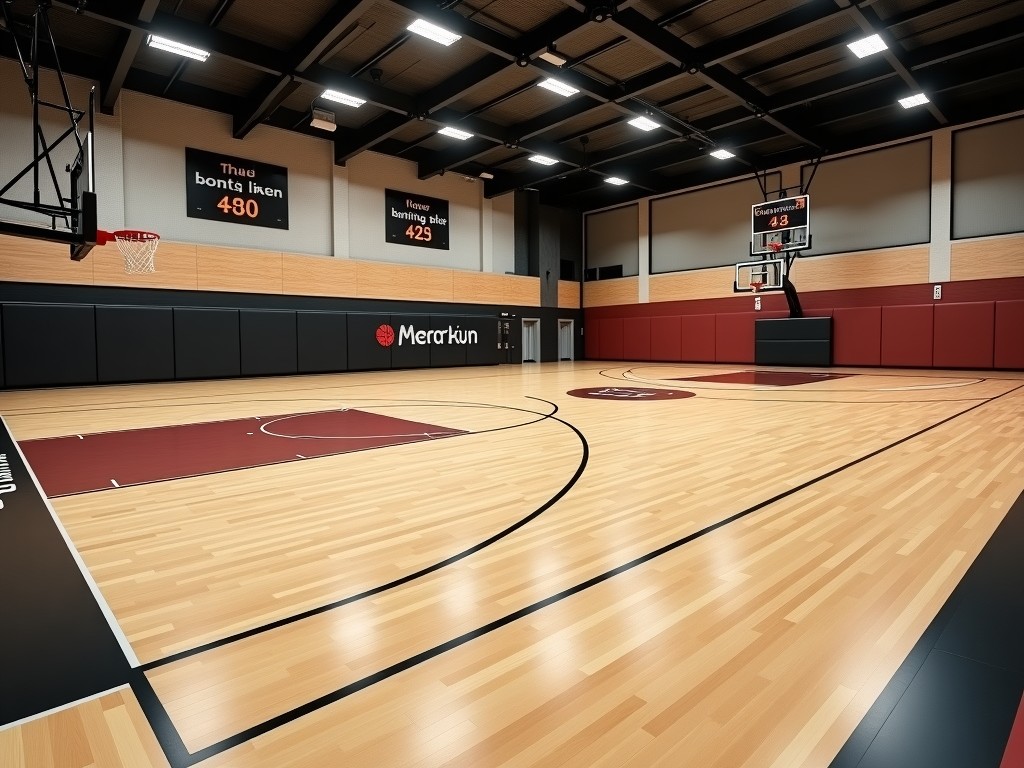
Custom Types Of Indoor Basketball Court Flooring Company
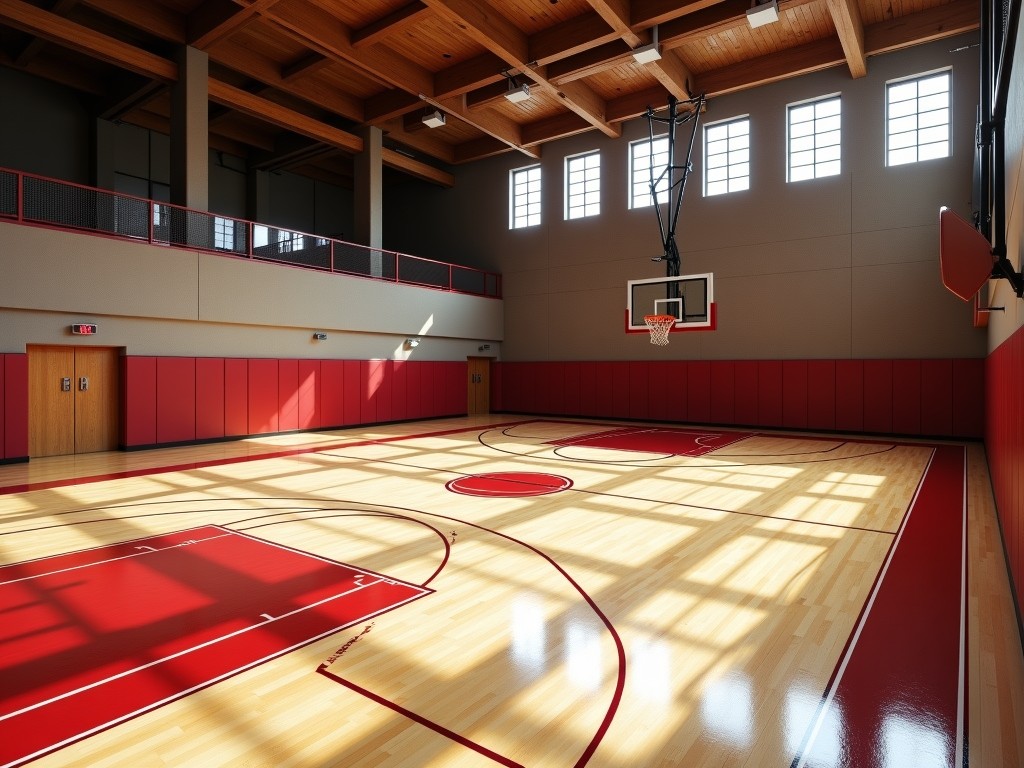
Custom Types Of Indoor Basketball Court Flooring Company
Custom Indoor Basketball Court Flooring Solutions
Overview
Indoor basketball courts demand a floor that provides consistent ball rebound, adequate shock attenuation for joint protection, and a surface friction level that supports quick lateral movements without excessive slip.
The flooring system must also resist wear from frequent shoe traffic, maintain dimensional stability under varying humidity, and allow for clear, permanent line markings.
Material Composition
Three primary material families are used for custom indoor basketball flooring: solid maple hardwood, polyurethane‑based synthetic surfaces, and interlocking polypropylene tiles.
- Solid maple strips, typically 20 mm thick, are sanded and finished with a urethane coating that provides a hardness of approximately 90 Shore A.
- Polyurethane systems consist of a 2 mm wear layer over a 10 mm shock‑absorbing underlayer, delivering a combined thickness of 12 mm and a tensile strength of 15 MPa.
- Polypropylene tiles are 16 mm thick, feature a raised‑dot pattern for drainage, and have a compressive strength of 25 MPa.
Performance Specifications
Key performance indicators are measured according to ASTM F2772 for sports flooring and include:
- Shock absorption (vertical deformation) – target range 35 %–50 % energy reduction compared to concrete.
- Ball bounce rebound – measured as a percentage of the ASTM F2117 standard, typically 90 %–98 % for maple and 85 %–93 % for synthetic surfaces.
- Coefficient of friction – static value between 0.5 and 0.7 to allow controlled slide during defensive maneuvers.
- Load rating – capacity to sustain point loads of 2 kN without permanent indentation.
Customization Options
Customization is driven by facility usage, aesthetic requirements, and budget constraints.
- Thickness – adjustable from 12 mm (synthetic) to 22 mm (hardwood with underlayer) to meet specific shock‑absorption targets.
- Surface finish – matte, satin, or gloss urethane; each finish alters the coefficient of friction by ±0.05.
- Line markings – permanent paint or inlaid tape, compliant with FIBA or NCAA specifications.
- Logo integration – CNC‑routed inserts or printed overlays that do not affect surface uniformity.
- Modular vs. permanent – interlocking tiles allow rapid reconfiguration; fixed systems are glued or nailed to a prepared subfloor.
Installation Considerations
Proper subfloor preparation is critical to achieve the designed performance.
- Moisture barrier – a 0.2 mm polyethylene sheet is required when installing over concrete slabs with relative humidity above 75 %.
- Acclimation – hardwood strips must be stored at 18 °C–22 °C and 45 %–55 % RH for at least 72 hours before installation.
- Fastening – synthetic surfaces are typically bonded with a two‑component polyurethane adhesive; hardwood may be cleat‑nailed or glued depending on subfloor type.
- Expansion gaps – a 10 mm perimeter gap is left to accommodate seasonal expansion, later covered by baseboards.
Quality Control
Manufacturing follows ISO 9001 procedures with in‑line testing at each stage.
- Raw material – hardness, moisture content, and density are verified before processing.
- In‑process – thickness uniformity is checked via laser profilometry; tolerance ±0.2 mm.
- Finished product – each batch undergoes ball rebound and shock absorption tests per ASTM F2772; results are recorded and supplied with the shipment.
Applications
Indoor basketball flooring is selected based on the expected usage intensity and multi‑functionality of the space.
- School gymnasiums – where daily class activities and weekend games require a durable, low‑maintenance surface.
- Community recreation centers – often host leagues, tournaments, and fitness classes, demanding consistent performance across varied footwear.
- Private training facilities – prioritize precise ball response and shock absorption to support athlete development.
- Multi‑purpose arenas – flooring must allow quick conversion to volleyball or badminton courts, necessitating low‑profile line markings and modular options.
Typical Performance Values
| Property | Solid Maple (20 mm) | Polyurethane Synthetic (12 mm) | Polypropylene Tile (16 mm) |
|---|---|---|---|
| Thickness (mm) | 20 | 12 | 16 |
| Shock absorption (% energy reduction) | 45 | 38 | 32 |
| Ball bounce rebound (% of standard) | 96 | 89 | 85 |
| Coefficient of friction (static) | 0.62 | 0.58 | 0.55 |
| Load rating (kN point load) | 2.5 | 2.0 | 1.8 |
Values are representative; actual specifications are tailored to project requirements.
Frequently Asked Questions
- Can dimensions be customized? Yes, panel sizes and overall court dimensions are adjustable to match existing architectural layouts.
- What information is required before quotation? Subfloor type, moisture readings, desired performance targets (shock absorption, ball bounce), and any branding or line‑marking specifications.
- What materials are available? Solid maple hardwood, polyurethane‑based synthetic surfaces, and interlocking polypropylene tiles, each with selectable thicknesses and finishes.
- How is quality inspected? Incoming raw material is tested for density and moisture; in‑process thickness is monitored via laser; finished lots undergo ASTM F2772 shock absorption and ball rebound tests.
- What packaging methods are available? Panels are stacked on pallets with corner protectors and stretch‑wrapped; tiles are packed in cartons with foam edge guards.
- How are export shipments protected? Each pallet receives a moisture‑barrier layer and is secured with steel straps; containers are loaded with adequate ventilation to prevent condensation.
- What is the typical production lead time? Lead time ranges from 4 to 6 weeks depending on material selection and order volume; expedited options are available upon request.
- How are samples arranged? Sample kits containing material swatches and small‑scale panels can be shipped via courier; shipping costs are credited against the final order.
For a technical consultation or to request a detailed quotation, please contact our engineering team.
Contact Us