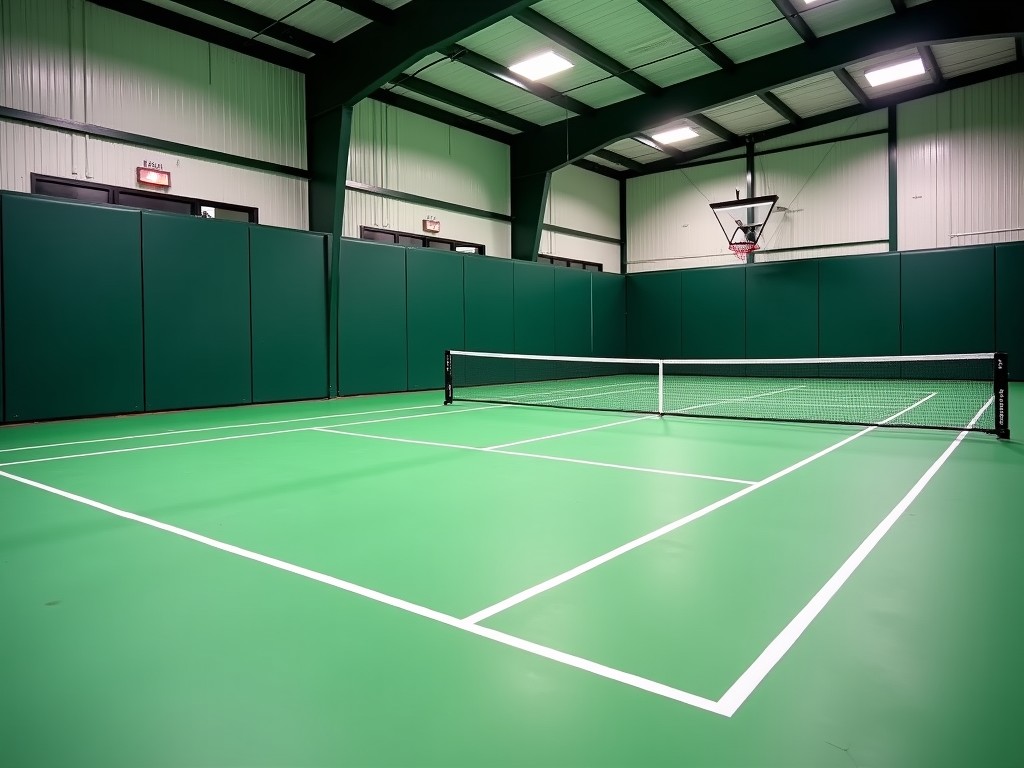
Custom Indoor Pickleball Sports Court Flooring Factory
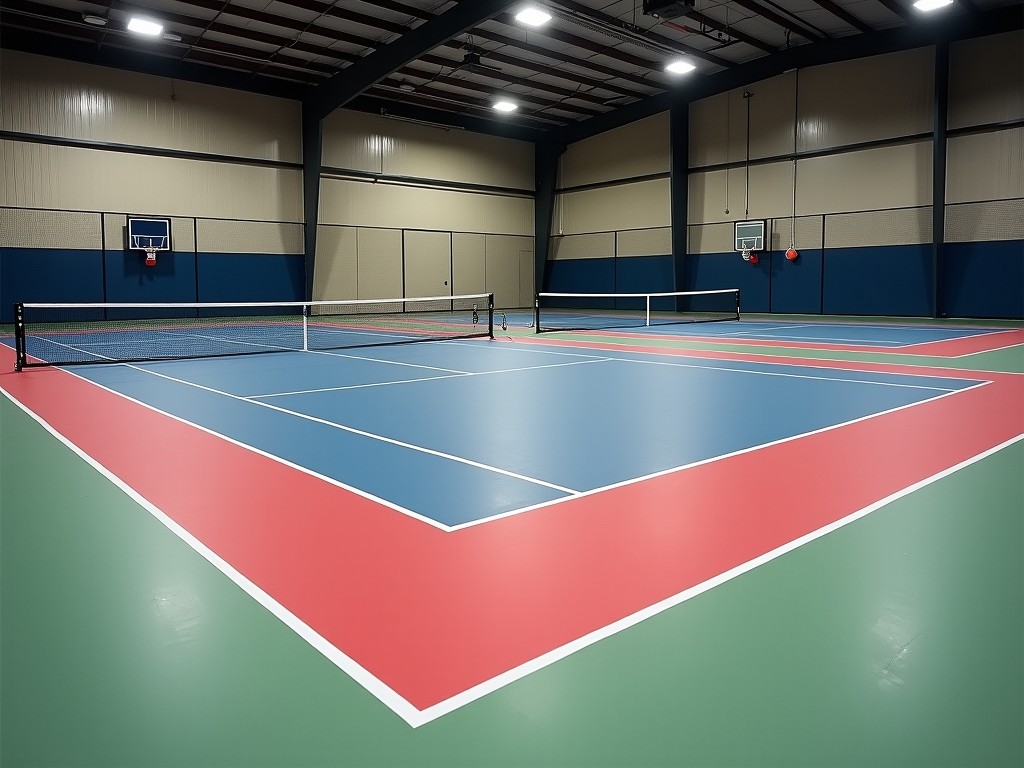
Custom Indoor Pickleball Sports Court Flooring Factory
Custom Indoor Pickleball Sports Court Flooring
Indoor pickleball courts demand a surface that provides predictable ball rebound, controlled foot‑slip, and sufficient impact attenuation to reduce player fatigue. The following sections detail the factory‑based approach to producing flooring that meets these functional requirements.
Overview
Our flooring system is manufactured in rolls or panels that can be cut to any court dimension, allowing seamless installation for both recreational and competition venues. The product is engineered from a composite of polymer resins and granulated rubber, calibrated to deliver specific mechanical responses.
Technical Specifications
| Property | Typical Value | Test Method |
|---|---|---|
| Overall Thickness | 12 mm (±0.5 mm) | ISO 24346 |
| Shore A Hardness | 85 ± 3 | ASTM D2240 |
| Vertical Deformation (at 20 N) | 2.3 mm (±0.2 mm) | EN 14808 |
| Coefficient of Friction (dry) | 0.65 – 0.78 | ASTM E303 |
| Ball Rebound (ASTM F2117) | 92 % ± 3 % | ASTM F2117 |
Material Composition
The top wear layer consists of a UV‑stabilized polyurethane coating, providing abrasion resistance and facilitating easy cleaning. Beneath this, a recycled SBR rubber granule matrix (30 % by weight) is bound with a polyurethane elastomer, delivering the required shock absorption. A stabilizing base layer of high‑density polyethylene foam (8 mm) prevents sub‑floor movement and contributes to dimensional stability.
Performance Characteristics
- Consistent ball bounce across the entire surface, verified by rebound uniformity within ±3 % over a 10 m × 10 m area.
- Impact force reduction of approximately 45 % compared to bare concrete, lowering peak tibial acceleration during lunges.
- Slip resistance maintained under both dry and lightly conditioned (sweat) surfaces, measured by a wet pendulum test value of 45 BPN.
- Dimensional change ≤0.1 % after 500 hours of exposure to 40 °C/90 % RH, ensuring long‑term flatness.
- Acoustic absorption coefficient of 0.22 at 500 Hz, reducing court noise in multi‑court facilities.
Customization Options
- Court dimensions: any length and width up to 20 m × 10 m per panel; seams can be welded or taped.
- Line colors: permanent PU‑based inks available in standard white, yellow, or custom Pantone matches.
- Surface texture: selectable from fine‑grain (for faster play) or medium‑grain (for enhanced grip) finishes.
- Thickness variants: 10 mm for multi‑purpose halls, 15 mm for elite competition where higher energy return is desired.
- Edge treatments: beveled, rounded, or flush with surrounding flooring systems.
Applications
Indoor pickleball facilities benefit from a floor that limits excessive shoe‑slide while allowing quick lateral movements. The controlled vertical deformation reduces joint stress during repetitive lunges, supporting longer play sessions without increased fatigue. Additionally, the low‑maintenance surface resists staining from ball marks and is compatible with standard gym cleaning protocols, making it suitable for community centers, school gymnasiums, and dedicated pickleball clubs.
Quality Control & Testing
Each production lot undergoes inline thickness monitoring via laser triangulation, with acceptance limits of ±0.5 mm. Post‑cure samples are conditioned at 23 °C/50 % RH for 48 hours before mechanical testing. Hardness, rebound, and friction are measured on five random points per lot; results must fall within the specified ranges before release. Visual inspection verifies line registration and absence of surface defects such as bubbles or delamination.
Installation Guidelines
Flooring rolls are acclimated to the installation environment for 24 hours prior to laying. Sub‑floor must be flat to within 3 mm over a 2 m straightedge, clean, and dry. Adhesive‑free interlocking edges are preferred for temporary courts, while permanent installations use a two‑part polyurethane adhesive applied at 0.3 kg/m². Seams are rolled with a 50 kg steel roller to ensure uniform bond lines. Line markings are applied after adhesive cure, using a stencil and UV‑stable ink.
Frequently Asked Questions
- Can dimensions be customized? Yes, panels are cut to any length and width; seams can be aligned to match court boundaries.
- What information is required before quotation? Court dimensions, desired thickness, line color preferences, and installation type (permanent or portable).
- What materials are available? Standard composition includes polyurethane wear layer, SBR rubber granule matrix, and polyethylene foam base; alternative elastomers are available upon request.
- How is quality inspected? Inline thickness checks, post‑cure mechanical testing, and visual inspection as described above.
- What packaging methods are available? Rolls are wrapped in polyethylene film and placed on corrugated pallets; panels are stacked with corner protectors and stretch‑wrapped.
- How are export shipments protected? Each pallet receives corner braces, top and bottom cardboard layers, and is secured with PET strapping; moisture‑absorbent sachets are included.
- What is the typical production lead time? 3‑4 weeks for standard specifications; custom colors or thicknesses may extend lead time by 1‑2 weeks.
- How are samples arranged? Small sample tiles (300 mm × 300 mm) can be shipped via express courier upon receipt of a request.
Contact for Quote
For a detailed quotation or to discuss specific project requirements, please reach out through our contact form.
Request a Quote