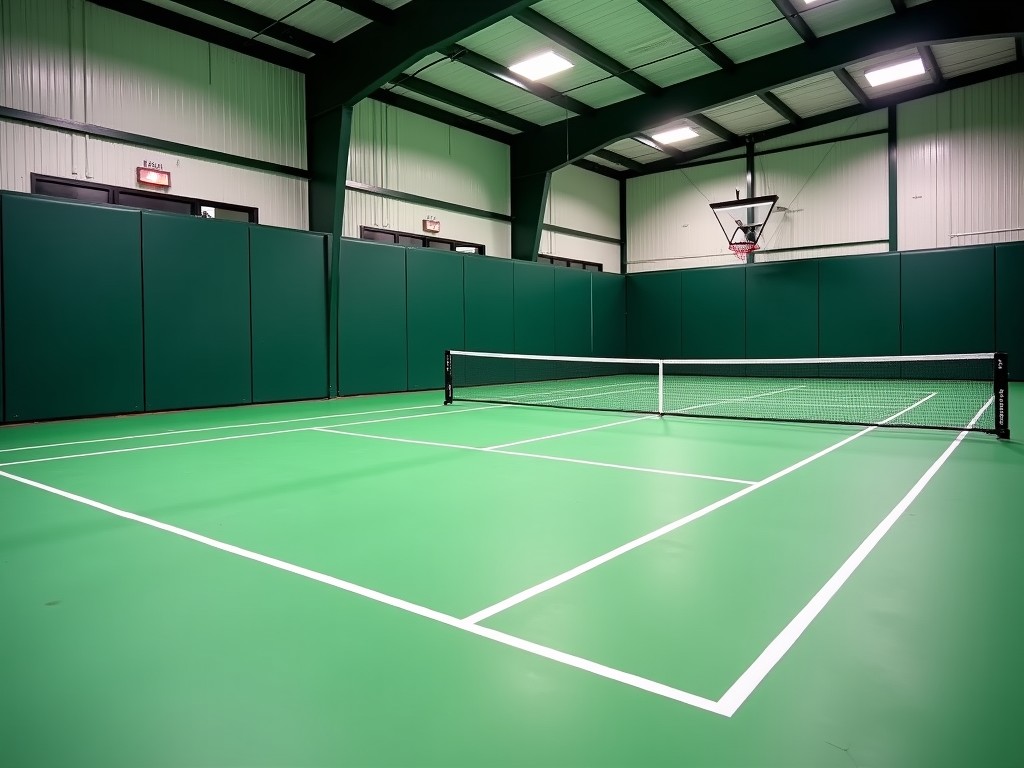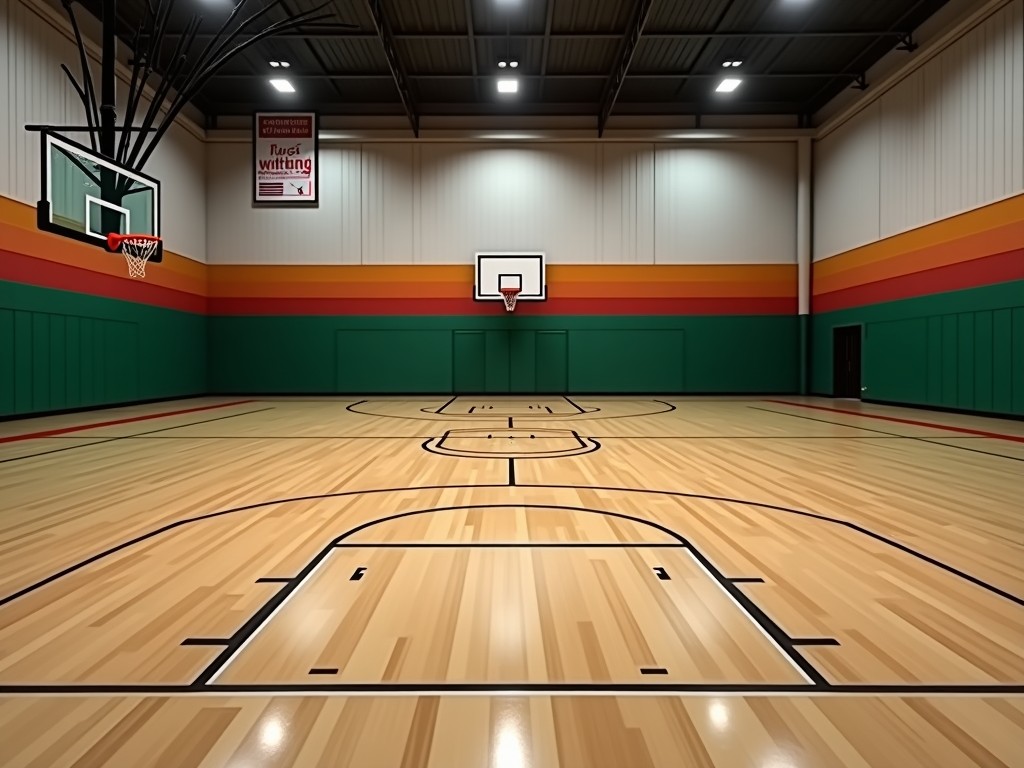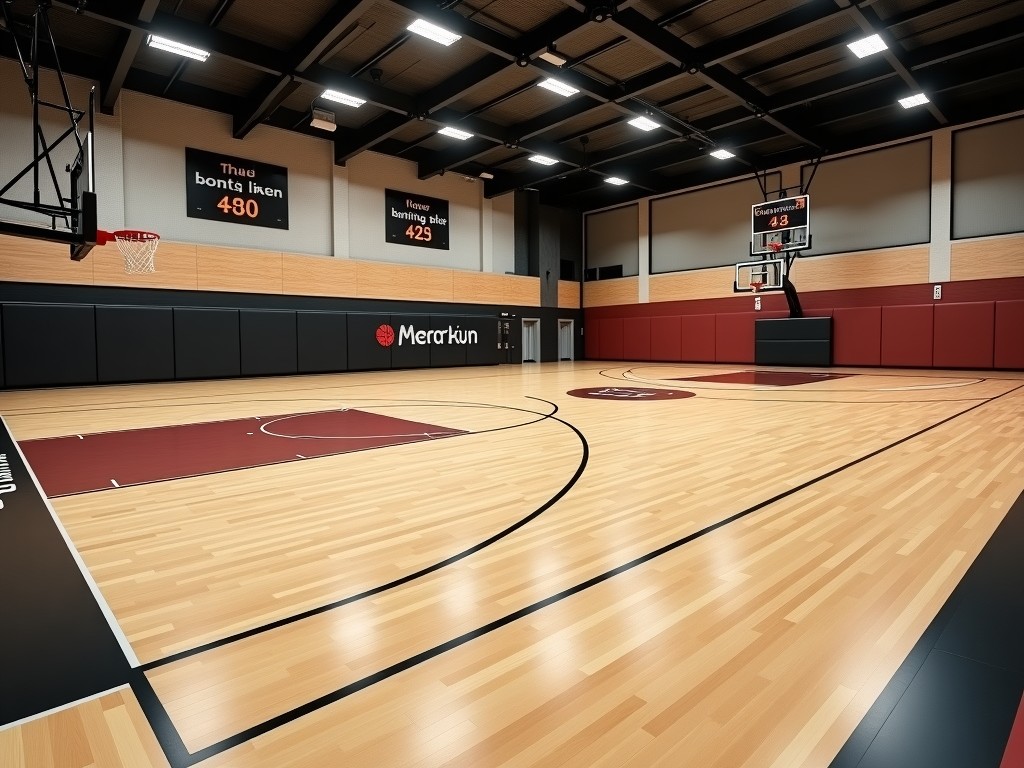
B2B Indoor Rubber Basketball Court Top Factory
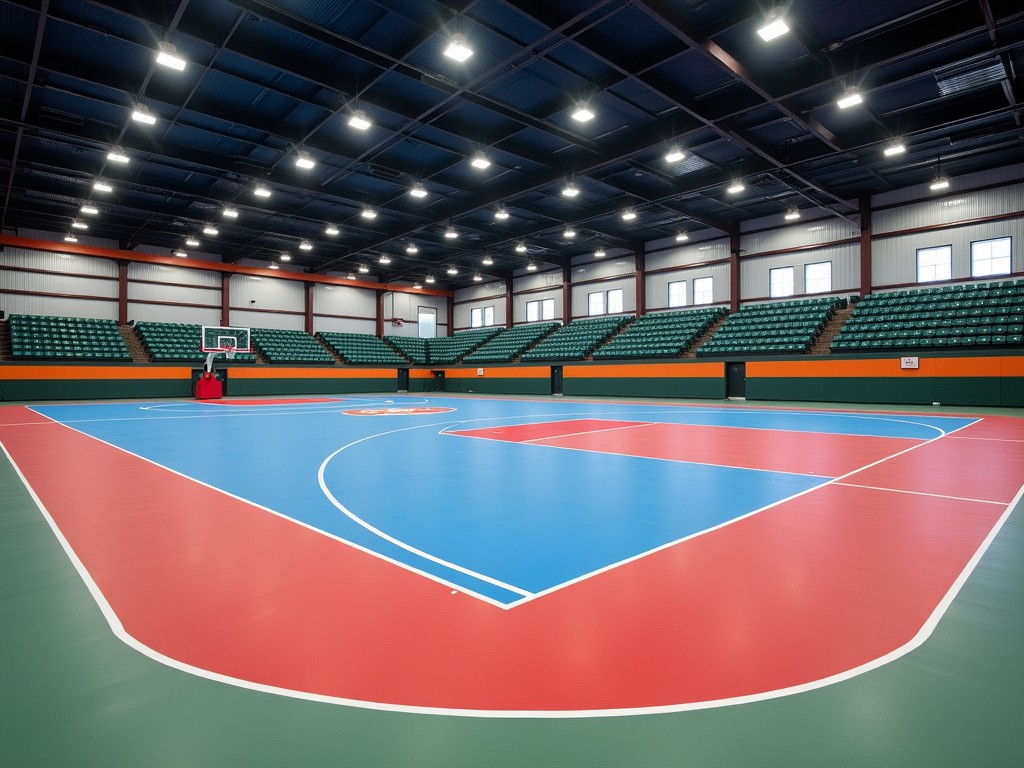
B2B Indoor Rubber Basketball Court Top Factory
B2B Indoor Rubber Basketball Court – Top Factory Overview
An indoor rubber basketball court is a resilient flooring system designed to provide consistent ball response, athlete safety, and low‑maintenance performance in enclosed sports facilities. The product consists of interlocking tiles or roll‑good sheets made from vulcanized rubber granules bonded with a polyurethane matrix, delivering a uniform surface that meets competitive play standards.
Material Composition and Structure
The core material blends styrene‑butadiene rubber (SBR) granules with ethylene‑propylene‑diene monomer (EPDM) pigments for color stability, typically comprising 85‑90 % rubber and 10‑15 % polyurethane binder by weight. This formulation yields a Shore A hardness range of 70‑85, a density of 1.15‑1.25 g/cm³, and a tensile strength exceeding 2.5 MPa after curing.
The surface layer incorporates a fine‑textured wear coat that enhances slip resistance while allowing rapid drainage of sweat. The backing layer includes a grid‑reinforced fabric that distributes load and limits dimensional change under cyclic loading.
Performance Specifications
Shock absorption, measured as force reduction per ASTM F2772, averages 55‑60 % compared with a rigid concrete substrate, reducing peak impact forces on joints. Vertical deformation under a 20 kg load stays within 1.5‑2.0 mm, ensuring consistent ball bounce.
Ball rebound, tested per FIBA‑approved method, reaches 92‑96 % of the rebound height on a polished hardwood court, satisfying competition‑level play. The coefficient of friction (wet/dry) ranges from 0.6‑0.8, providing adequate grip for lateral movements without excessive shoe wear.
Abrasion resistance, evaluated by Taber wear index (CS‑10 wheels, 500 g load), shows less than 80 mg loss per 1000 cycles, indicating long‑term surface integrity. Fire performance meets ASTM E84 Class A with a flame spread index below 25 and smoke development under 450.
Installation and Subfloor Requirements
The substrate must be flat, clean, and dry, with a tolerance of ±3 mm over a 2 m span. A moisture barrier film (minimum 0.15 mm polyethylene) is required when installing over concrete to prevent vapor transmission that could degrade the binder.
Interlocking tiles are laid dry‑fit, with perimeter expansion gaps of 6‑10 mm accommodated by flexible urethane trim. Roll‑good systems are adhered using a two‑component polyurethane adhesive applied at 0.3‑0.4 mm thickness, achieving full cure in 24 h at 23 °C/50 % RH.
Customization Options
- Thickness: 10 mm, 15 mm, or 20 mm modules, selectable based on load‑bearing needs and acoustic targets.
- Color: Standard palette (red, blue, green, gray) or custom Pantone matching via EPDM pigment adjustment.
- Surface texture: Orange‑peel (default) for enhanced grip or smooth finish for multi‑use courts.
- Graphics: Embedded logos or court markings baked into the wear layer during vulcanization.
- Edge treatment: Beveled, square, or tapered profiles to match adjacent flooring transitions.
Quality Control and Testing
Each batch of rubber granules undergoes sieving and specific gravity checks to ensure consistent particle size distribution (0.5‑2.0 mm). The polyurethane blend is monitored for viscosity and pot life before mixing.
Finished products are sampled for Shore A hardness (target 75 ± 3), thickness (±0.5 mm), and tensile strength (≥2.5 MPa). Rebound performance is verified on a calibrated drop‑test rig, and accelerated aging (UV‑B 340 nm, 500 h) confirms less than 5 % hardness shift.
The manufacturing facility maintains ISO 9001:2015 certification, with inline statistical process control charts tracking key parameters. Final inspection includes visual defect screening and slip‑resistance spot checks before packaging.
Typical Applications in Industrial and Institutional Settings
Educational institutions select this flooring for gymnasiums because the impact attenuation reduces injury risk during high‑frequency use, while the low‑maintenance surface withstands daily cleaning regimens without delamination.
Corporate wellness centers value the acoustic dampening (estimated 6‑8 dB reduction in footfall noise) that allows simultaneous activities in adjacent spaces. The non‑porous finish resists staining from sports drinks and facilitates disinfection protocols.
Multi‑purpose community halls benefit from the modular interlocking design, enabling rapid reconfiguration for events such as trade shows or concerts, with load distribution capable of supporting temporary seating up to 4 kN/m².
Specification Table
| Property | Test Method | Typical Value | Unit |
|---|---|---|---|
| Shore A Hardness | ASTM D2240 | 70‑85 | – |
| Thickness | Caliper Measurement | 10, 15, 20 | mm |
| Tensile Strength | ASTM D412 | ≥2.5 | MPa |
| Force Reduction | ASTM F2772 | 55‑60 | % |
| Ball Rebound | FIBA Method | 92‑96 | % |
| Coefficient of Friction (wet) | ASTM F2913 | 0.6‑0.8 | – |
| Abrasion Loss (Taber) | ASTM D4060 | <80 | mg/1000 cycles |
| Fire Rating | ASTM E84 | Class A | – |
Frequently Asked Questions
Can dimensions be customized?
Yes. Panel sizes range from 500 mm × 500 mm to 1000 mm × 1000 mm, and custom lengths are available for roll‑good systems, subject to minimum order quantities.
What information is required before quotation?
Provide the intended court area (square meters), desired thickness, color preference, and any logo or marking specifications. Subfloor condition and project timeline help refine logistics.
How is quality inspected?
Each lot undergoes dimensional checks, hardness testing, and rebound validation. A final visual inspection confirms surface uniformity before packaging.
What packaging methods are available?
Tiles are stacked in corrugated cartons with edge protection; roll goods are wound on rigid cores and wrapped in polyethylene film. Both options include palletizing for fork‑lift handling.
What is the typical production lead time?
Standard colors ship within 3‑4 weeks after receipt of approved artwork. Custom colors or logos may extend lead time to 5‑6 weeks.